Case Study:
GiPSY
mobile App

01
Objective
To design and implement a user-centric location-based social messaging app, GiPSY, enabling users to exchange real-time, location-specific information. The app’s purpose is to bridge the gap between curiosity and instant answers for location-dependent queries by leveraging the proximity and experiences of other users.
02
Problem Statement
Current platforms like Google reviews or business websites often provide delayed or outdated information about places, limiting users’ ability to make informed decisions in real-time. GiPSY aims to solve this by offering live, peer-to-peer communication based on shared locations, fostering instant feedback and a sense of community.

03
Key Features
- Location-Based Messaging:
- Users can send questions tied to specific businesses or landmarks.
- Questions are routed to other users present at the same location in real-time.
- User Roles:
- Asker: The user seeking information.
- Responder: The user available at the specified location, offering insights.
- Sample Use Cases:
- Restaurants:
- "Is the restaurant open now?"
- "Is it suitable for a romantic dinner?"
- "How is the food quality?"
- Pharmacies:
- "Is the product I need in stock?"
- "Are there any special deals today?"
- Retail Stores:
- "What are the current wait times at checkout?"
- "Is this store hosting any sales?"
- Gamification:
Rewarding users (e.g., points, badges) for providing timely and helpful responses.
- Privacy Controls:
- Anonymous or identifiable user options.
- Ability to block or mute unwanted queries.
User Experience (UX) Journey
Onboarding:
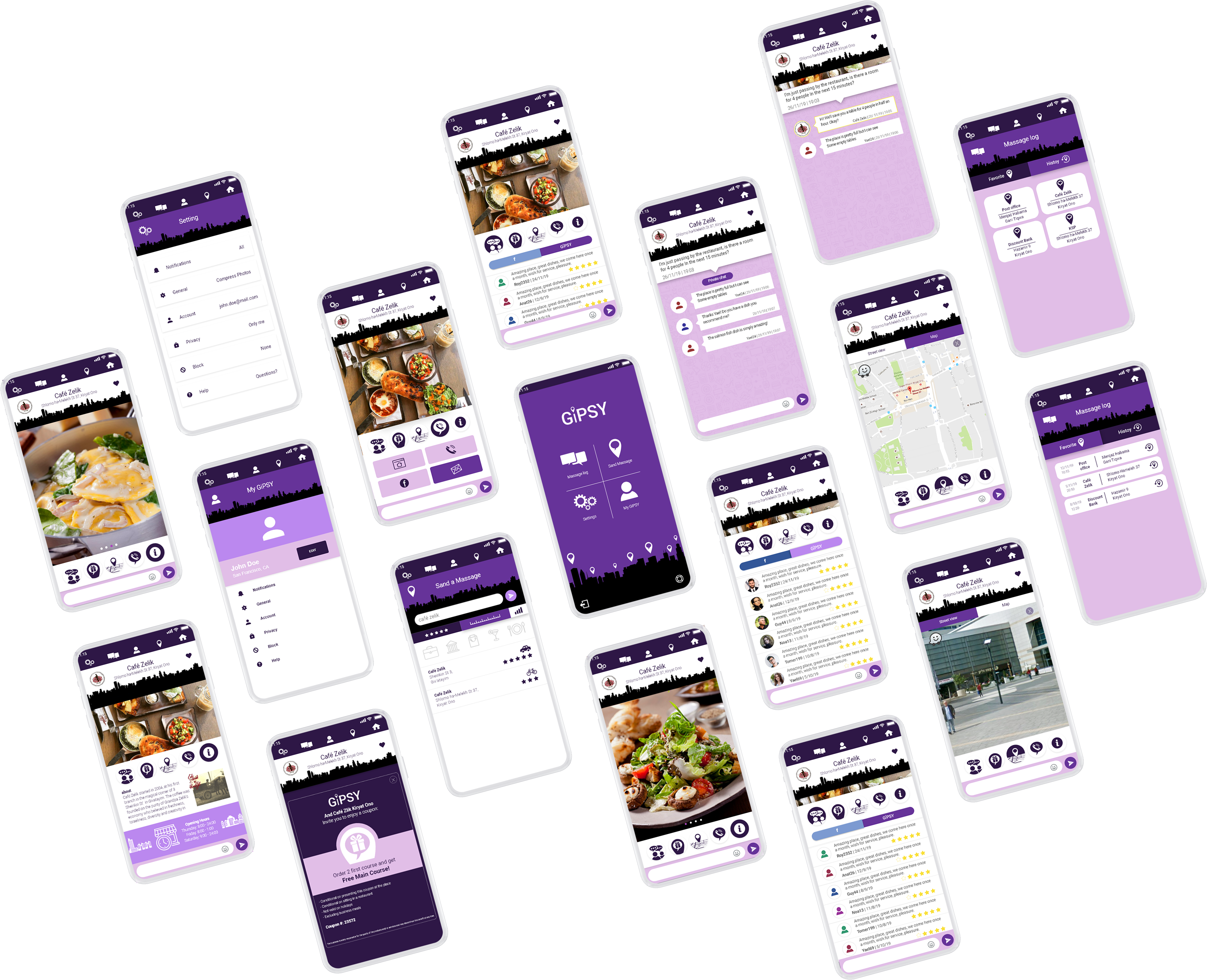
Users are guided through a quick tutorial explaining the app's purpose, navigation, and privacy features.
Core Interaction:
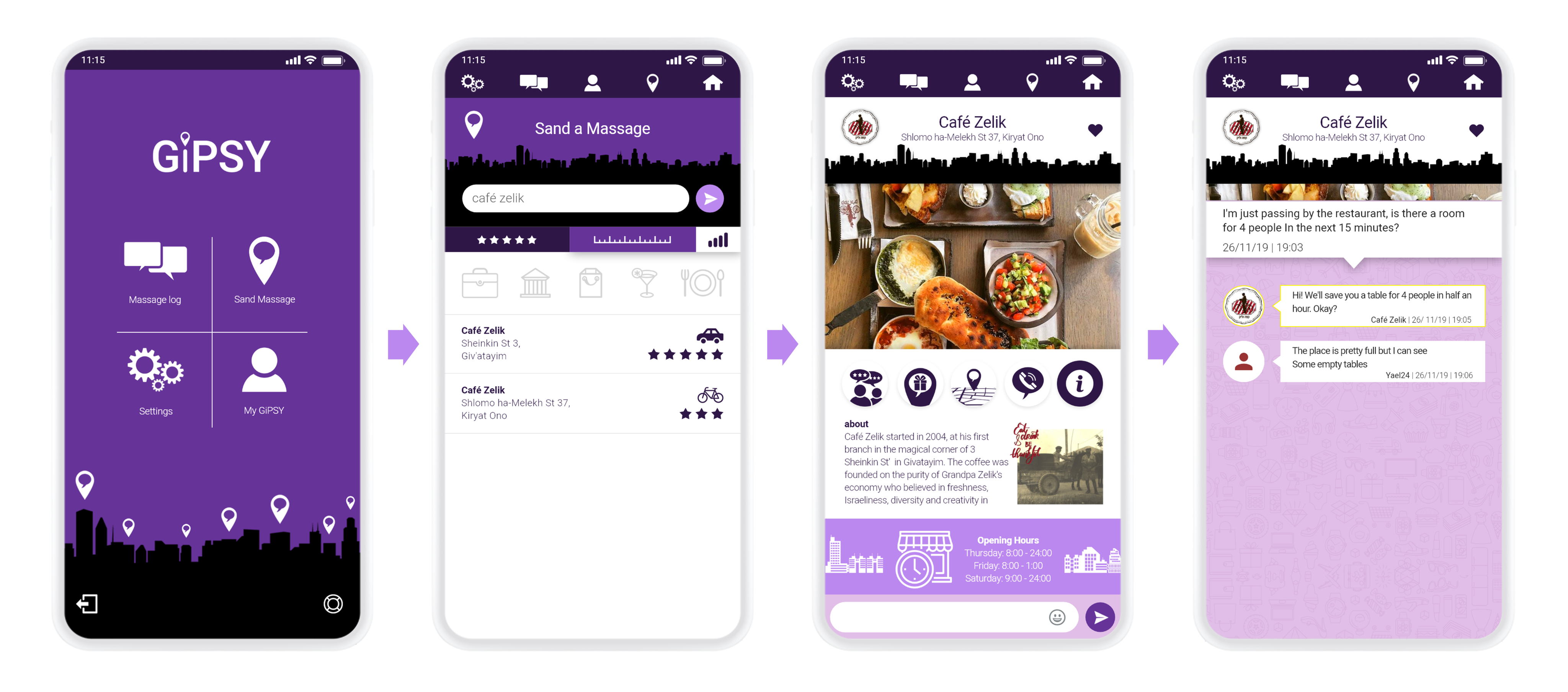
- Asker opens GiPSY, selects or searches a business, and types a question.
- Responder receives a notification (if opted in) and answers.
Feedback Loop:
Askers can rate the helpfulness of a response, influencing the responder’s reliability score.
Community Features:
- Responder profiles highlight their contribution to fostering trust.
- Users can save their favorite locations for faster access.

UI Design Overview
Home Screen:
A map-centric design showing nearby businesses and active users.
Quick-action buttons for asking questions.
Chat Interface:
Simple, clean messaging UI with auto-suggested prompts for common questions.
Notification System:
Push notifications for incoming questions or relevant nearby activity.
Settings:
Options to toggle visibility, notification preferences, and privacy modes.
In conclusion
GiPSY not only empowers individuals to make better decisions but also transforms how location-based information is shared. With its unique approach to peer-to-peer interactions, the app stands out as a practical, community-driven solution for real-time inquiries.


LET’S TALK.
you know Your users deserve better experiences. I design those. let’s talk.




@2024 created by Asaf Ehud
Case Study:
GiPSY
mobile App
01
Objective
To design and implement a user-centric location-based social messaging app, GiPSY, enabling users to exchange real-time, location-specific information. The app’s purpose is to bridge the gap between curiosity and instant answers for location-dependent queries by leveraging the proximity and experiences of other users.
02
Problem Statement
Current platforms like Google reviews or business websites often provide delayed or outdated information about places, limiting users’ ability to make informed decisions in real-time. GiPSY aims to solve this by offering live, peer-to-peer communication based on shared locations, fostering instant feedback and a sense of community.
03
Key Features
- Location-Based Messaging:
- Users can send questions tied to specific businesses or landmarks.
- Questions are routed to other users present at the same location in real-time.
- User Roles:
- Asker: The user seeking information.
- Responder: The user available at the specified location, offering insights.
- Sample Use Cases:
- Restaurants:
- "Is the restaurant open now?"
- "Is it suitable for a romantic dinner?"
- "How is the food quality?"
- Pharmacies:
- "Is the product I need in stock?"
- "Are there any special deals today?"
- Retail Stores:
- "What are the current wait times at checkout?"
- "Is this store hosting any sales?"
- Gamification:
Rewarding users (e.g., points, badges) for providing timely and helpful responses.
- Privacy Controls:
- Anonymous or identifiable user options.
- Ability to block or mute unwanted queries.
User Experience (UX) Journey
Onboarding:
Users are guided through a quick tutorial explaining the app's purpose, navigation, and privacy features.
Core Interaction:
- Asker opens GiPSY, selects or searches a business, and types a question.
- Responder receives a notification (if opted in) and answers.
Feedback Loop:
Askers can rate the helpfulness of a response, influencing the responder’s reliability score.
Community Features:
- Responder profiles highlight their contribution to fostering trust.
- Users can save their favorite locations for faster access.
UI Design Overview
Home Screen:
A map-centric design showing nearby businesses and active users.
Quick-action buttons for asking questions.
Chat Interface:
Simple, clean messaging UI with auto-suggested prompts for common questions.
Notification System:
Push notifications for incoming questions or relevant nearby activity.
Settings:
Options to toggle visibility, notification preferences, and privacy modes.
In conclusion
GiPSY not only empowers individuals to make better decisions but also transforms how location-based information is shared. With its unique approach to peer-to-peer interactions, the app stands out as a practical, community-driven solution for real-time inquiries.


LET’S TALK.
you know Your users deserve better experiences. I design those. let’s talk.

@2024 created by Asaf Ehud